
Best binocular brand: my honest ranking by use and budget
There is no single winner. But there is a brand built for your use and your budget, and I am going to help you find it.
You are searching for the best binocular brand, and I am going to be straight with you from the off: there is no single answer. I am Teddy, a travel and nature photographer based in Brittany, and for this guide I have worked through our comparator covering 288 models across 12 brands. Not one of them wins on every front.
What does exist, though, is the best brand for you: for your use, your budget and the conditions you observe in. Whether you are a birdwatcher looking for a sharp 8x42 to take around a RSPB reserve, a hillwalker wanting something compact and tough, or a stalker who needs dependable optics in the dark and the wet, the right answer is different each time.
In this guide I take each of the 12 brands apart, then cross them with real use cases and realistic budget tiers. At the end you will have a short-list. The comparator does the final sorting, model by model.
Why there is no single best binocular brand
Asking for the best binocular brand is a bit like asking for the best car. It depends entirely on what you are doing with it. A brand can be untouchable at the very top of the market and almost invisible at the entry level. Another can punch hard on value-for-money without ever competing at the flagship end.
The UK binocular market has a particular shape to it. Birdwatching is the dominant use case, which means the 8x42 and 10x42 formats get more attention here than in most other countries. Brands like Kite, which is massive in European ornithology circles but barely known outside them, thrive in this market. Brands that are household names in the United States, such as Vortex, have grown strongly here but still trail the European and Japanese makers in heritage and reputation.
Budget tiers also matter more here than the raw prices suggest. British buyers tend to research carefully before spending, which is exactly why guides like this one rank so well in UK search results. You are not buying on impulse. You want to understand the landscape first.
That is why I always think in two steps: first, the brand to establish a baseline of confidence; second, the specific model for your use. The rest of this guide follows exactly that logic.
How I judge a binocular brand
I am going to be transparent about my approach, because that is what earns trust. I do not laboratory-test all 288 models in our database. What I do is cross four sources: manufacturer specifications (not all spec sheets are equally honest), recognised expert reviews that I verify against each other, real-world feedback from birding and stalking communities who use these optics every single day, and my own eye as a photographer for judging glass quality, coatings and ergonomics.
When I have handled a model personally, I say so. When I am drawing on documented synthesis, I say that too. I never pretend to have tested in the field something I have only read about. That honesty is what makes this worth reading.
- Optical quality. Sharpness centre to edge, light transmission, and the presence of ED glass. ED stands for extra-low dispersion: these lens elements reduce the coloured fringing you see around high-contrast subjects like a bird against a bright sky. It is the single biggest quality differentiator in the mid-range.
- Build quality and warranty. Waterproofing, nitrogen purging (which prevents internal fogging on cold, damp British mornings), long-term mechanical reliability, and the quality of after-sales service if something goes wrong.
- Range depth. A brand that covers entry level through to flagship lets you grow within the same ecosystem. A brand with only a handful of models leaves you nowhere to go.
- Value for money. What you actually get for your investment, not what the marketing says. This matters especially in the mid-range, where differences between brands are largest.
- Consistency. A brand that keeps its promises across the whole range, with no obvious "trap" models that are overpriced relative to the competition at the same tier.
The figures I cite in this guide (model counts, range coverage) come from our comparator. That is our snapshot of the market, not an exhaustive global census, but it is broad enough to identify reliable patterns. When I say Kite has 45 models in our database, that tells you something real about the depth of its catalogue.
The big binocular brands under the loupe
Here are the 12 brands in our database, their origin, their positioning and their model count. Read the table as a quick orientation, then go deeper in the sections below where I give you the honest strengths and weaknesses of each.
| Brand | Origin | Positioning | Models* |
|---|---|---|---|
| Swarovski | Austria | Flagship reference, the gold standard | 31 |
| Leica | Germany | Premium, sharpness and finish above all | 25 |
| Zeiss | Germany | Premium, broadest range, nearly all ED | 28 |
| Maven | USA | Direct-sale, all ED, strong mid-to-high | 24 |
| Kowa | Japan | Optical specialist, mid-to-high end | 27 |
| Nikon | Japan | Full range, best all-round value | 30 |
| Kite | Belgium | Widest catalogue in our base, birding focus | 45 |
| Vortex | USA | Lifetime warranty, entry to premium | 31 |
| Steiner | Germany | Ruggedness and waterproofing first | 26 |
| Bushnell | USA | Entry and mid range, workhorse builds | 7 |
| Pentax | Japan | Reliable classics, competitive pricing | 13 |
| Meopta | Czech Republic | Under the radar but genuinely serious | 1 |
Top tier: Swarovski, Leica and Zeiss
These three are the reference names in binoculars, and the competition between them is fierce. Swarovski (Austria) is the benchmark that everyone else is measured against. With 31 models in our database, the range is anchored by the NL Pure and the EL series: optical and mechanical quality at the absolute summit of what is commercially available, with prices to match. If you can afford a Swarovski flagship, you will not find better glass in the field.
Leica (Germany) bets on sharpness and impeccable build. The Noctivid is its standard-bearer, a binocular that many experienced birders argue gives the most vivid, contrasty image of anything on the market. Leica's weakness is range depth: 25 models, and the entry-level options are not where the brand earns its reputation. If you are buying Leica, buy it at the level where it shines.
Zeiss (Germany) has the broadest offer of the three, stretching from the Terra range at the affordable end down to the extraordinary Victory SF. In our database, the vast majority of its models feature ED glass throughout. That is a meaningful commitment. The SF's field of view is the widest of any premium binocular at equivalent magnification, which is a genuine advantage for tracking birds in flight or following deer at the edge of cover. If you cannot decide between the three, try them side by side in a shop. At this tier the differences come down to personal preference.
Best value: Nikon, Kite, Maven and Kowa
This is where most people should be looking, and where the most interesting decisions are made. Nikon (Japan) offers the most balanced range in our entire database, 30 models from the Prostaff entry series up to the Monarch HG. Nikon glass has always been optically honest: you get a clean, bright image without the colour casts that cheaper alternatives can produce. The Prostaff P3 and P7 are perennial UK bestsellers because they deliver exactly what is promised at the price, without pretension and without disappointment.
Kite (Belgium) has 45 models in our database, the widest catalogue of any brand we carry, and it is strongly oriented towards ornithology. Kite is not a brand you often see in high-street opticians, but within the birding community it has a devoted following. The Bonelli series in particular earns consistent praise for its close focus performance and warm, natural colour rendering. For UK birdwatchers on a sensible budget, Kite deserves much more attention than it typically gets.
Maven (USA) uses a direct-to-customer model, which means you get considerably more optics for your money than the high-street margins allow. Every model in our database comes with ED glass as standard. The trade-off is that you cannot try before you buy in a physical shop, and the brand has less UK visibility than Nikon or Zeiss. But if you are comfortable buying on specification and reputation, Maven punches well above its weight. Kowa (Japan) is a pure optical specialist, with 27 models that cover the mid-to-high end with real authority. Kowa's XD glass is their equivalent of ED, and the image quality at the mid-range is often startlingly good relative to the price. The brand is well established in serious birding circles.
For the vast majority of buyers, the right binocular lives in this group. Do not spend flagship money if your use case does not demand it.
Rugged and bargain-friendly: Vortex, Steiner, Bushnell and Pentax
Vortex (USA) has a headline argument that nothing else in the market can match: the VIP lifetime warranty, which repairs or replaces your binoculars with no receipt required, no questions asked, even if the damage is your fault. That warranty alone makes Vortex compelling for a first serious purchase. The range runs from the Crossfire at the entry end, through the Diamondback HD and Viper HD that consistently top UK mid-range comparisons, up to the Razor, which genuinely competes with the Zeiss Conquest and the Nikon Monarch HG. With 31 models in our database, Vortex covers the whole market. The only caveat is that not every model uses ED glass: check the spec sheet for the one you are considering.
Steiner (Germany) puts ruggedness first. If you are hunting in wet Scottish hills or observing from a boat in heavy weather, Steiner's sealing and mechanical durability are genuine differentiators. In our database, Steiner tends to favour robust construction over ED glass: that is a deliberate choice, not a shortcut. A standard norm for the sector is not a flaw. If you need a binocular that takes punishment and keeps working, Steiner is the right conversation to be having.
Bushnell (USA) keeps things honest at the entry and mid level, with seven models in our database. The Forge sits at the top of the range and overperforms at its price point. Below it, the Legend and Powerview lines are solid, unpretentious workhorses. Pentax (Japan) brings 13 models of reliable, competitively priced binoculars. The brand does not shout loudly, but the Jupiter and SP ranges have earned their reputations over many years. And Meopta (Czech Republic) is represented by a single model in our database, but it is worth a look if you find one: Czech optical manufacturing has a long and serious history.
The best binocular brand for your use and budget
Now that the brands are located, let us cross them with your actual practice. The table below shows the brands I look at first for each major use case. Nothing here is carved in stone, but it should save you from the classic mistakes: buying stalking optics when you mostly watch garden birds, or spending flagship money on a magnification you will find too unsteady to hold.
| Your use | Brands I look at first |
|---|---|
| Birdwatching (general) | Kite, Zeiss, Nikon, Swarovski |
| Birdwatching (serious, 8x42 or 10x42) | Swarovski, Leica, Zeiss, Kowa |
| Walking and hiking | Nikon, Vortex, Kite, Maven |
| Safari and travel | Swarovski, Zeiss, Maven, Nikon |
| Stalking and hunting | Steiner, Swarovski, Leica, Vortex |
| Low light and dusk | Nikon, Kowa, Vortex, Zeiss |
| First purchase or tight budget | Nikon, Vortex, Kite, Bushnell, Pentax |
A word on the birdwatching split above: general birdwatching covers everything from garden feeders to a weekend at a coastal reserve. For that use, Kite and Nikon offer the best bang for your pound at sensible prices. Serious birding, meaning regular field use where optical quality directly affects your enjoyment, is where Swarovski, Leica and Zeiss justify their prices. The image stability, edge-to-edge sharpness and colour accuracy at the top end genuinely do make a difference when you are watching a warbler at 40 metres.
For walking and hiking, weight and toughness matter as much as optics. A compact 8x32 or 10x32 from Nikon or Vortex will serve you well. The exit pupil (the disc of light that reaches your eye, calculated by dividing the objective lens diameter by the magnification) is smaller on a 32mm binocular than on a 42mm, which means slightly less brightness in poor light. But for daylight use in the hills that is rarely a problem.
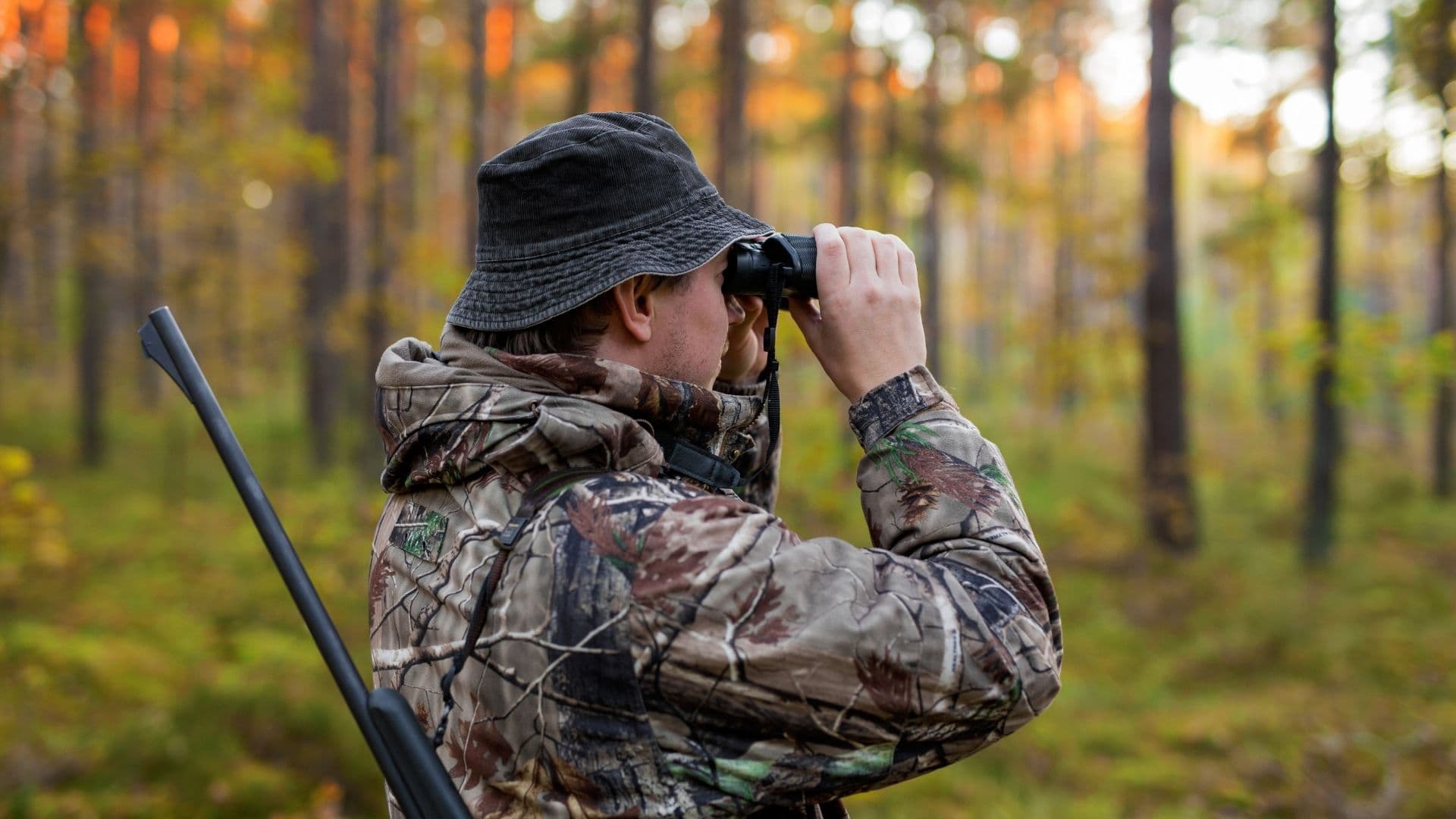
On the budget side, the principle is straightforward: the higher you go, the more you are paying for the last few percent of performance. That last few percent matters enormously to an experienced birder who uses their optics every day. It matters much less to someone who goes out once a fortnight. Here is where each brand fits across the tiers.
| Budget tier | Brands and benchmark models |
|---|---|
| Entry (under approx. £150) | Nikon Prostaff P3, Vortex Crossfire, Bushnell, Kite lower range, Pentax Jupiter |
| Mid-range (approx. £150-£600) | Nikon Monarch M7, Zeiss Conquest HD, Kite Bonelli, Maven, Vortex Viper HD, Kowa |
| High end (approx. £600-£1,500) | Zeiss Victory HT, Nikon Monarch HG, Vortex Razor, Leica Trinovid HD, Steiner Nighthunter |
| Flagship (above approx. £1,500) | Swarovski NL Pure / EL, Leica Noctivid, Zeiss Victory SF |
FAQ: best binocular brand
What is the best binocular brand overall?
Which binocular brand is best for birdwatching in the UK?
Is Vortex worth it compared to European brands?
Should I choose an 8x42 or 10x42 binocular?
Are Japanese binocular brands as good as German ones?
Ready to look at models?
The comparison tool applies this exact method: it ranks binoculars by how you'll use them and your budget.
Compare binocularsAbout the author
Teddy
Travel and adventure photographer based in Vannes, Brittany, for nearly ten years. I observe wildlife through optics every day and help nature enthusiasts choose their binoculars and spotting scopes, without the jargon.