Vortex Diamondback HD 8x42 Review: Does the Lifetime Warranty Seal It?
One of the world's best-selling entry-level pairs, backed by a lifetime warranty with no strings attached. Here is what it is genuinely worth at the eyepiece.
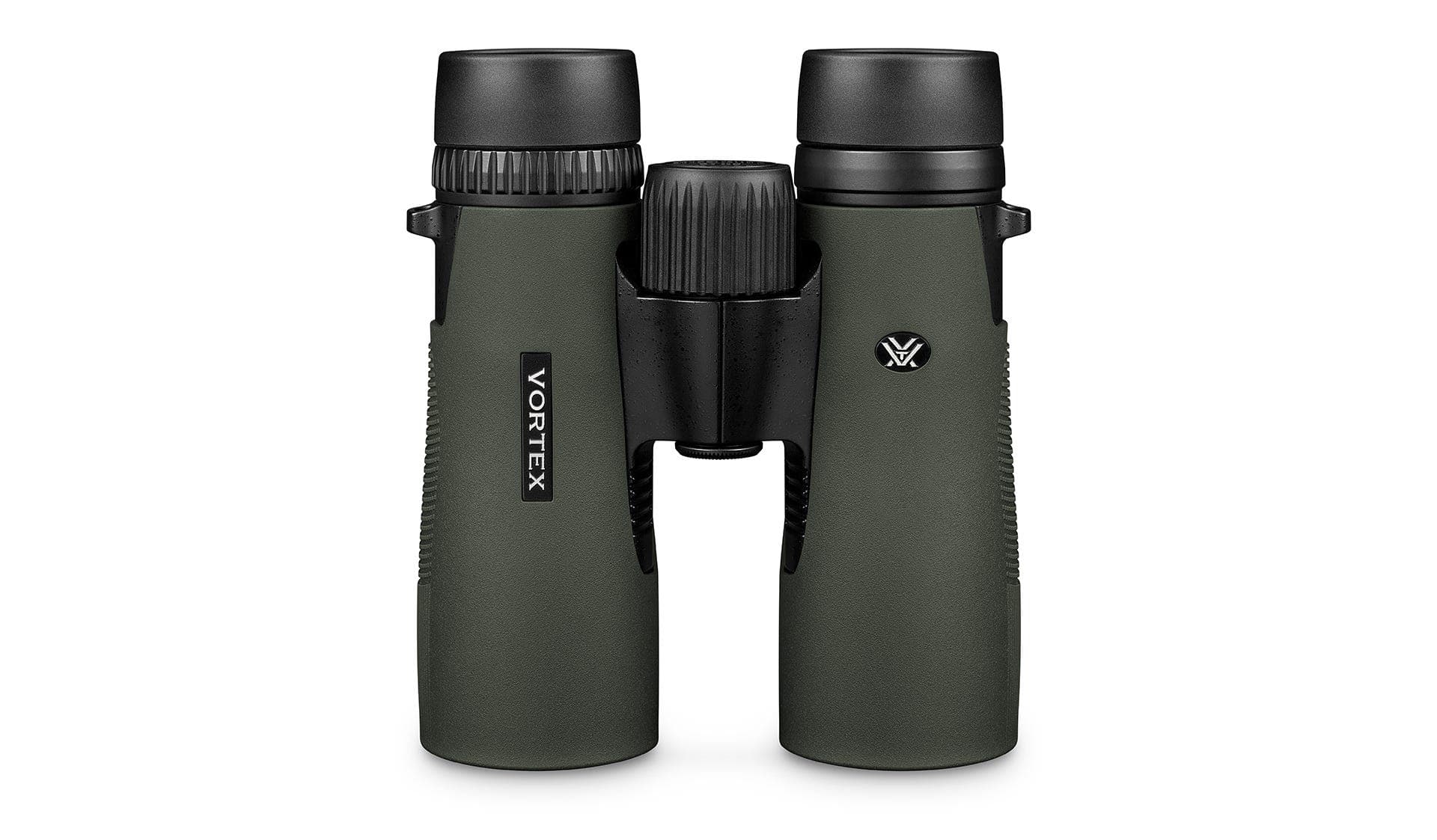
Vortex
Vortex Diamondback HD 8x42


My verdict
My Vortex Diamondback HD 8x42 review boils down to one thing: what you get for the money. For roughly £230 you pick up coatings that normally live a couple of rungs further up the ladder, namely a dielectric prism coating and phase correction, and together they give you a bright, properly contrasty image. Add just 618 g on the strap, a close focus of 1.5 m (the best in my whole line-up) and full weatherproofing, and this is an entry-level pair with very good bones.
The knockout argument is Vortex's lifetime VIP warranty: unlimited, no proof of purchase needed, and transferable if you sell the pair on. At this price nobody else comes close. In exchange you have to accept two real limits: there is no ED glass here (so a bit more colour fringing), and the 131 m field of view is narrower than most rivals. Below, I tell you who this is the obvious choice for, and when you are better off finding another £150.
Strengths
- Lifetime VIP warranty: unlimited, no proof of purchase, transferable
- Dielectric prism coating and phase correction: rare at this price, bright image
- Close focus of 1.5 m: the best in my line-up, brilliant for insects
- Just 618 g: light enough to carry all day without noticing
- ArmorTek coating: lenses shrugged off scratches, oil and fingerprints
- Waterproof and nitrogen filled against fogging: dependable in any weather
Weaknesses
- No ED glass: visible colour fringing along high-contrast edges
- 131 m field of view: narrower than most rivals in the segment
- No tripod adaptability: a shame for long, static sessions
Who is it for?
- The beginner who wants a serious first pair without going past £300
- Anyone who wants to buy once: the lifetime warranty genuinely does the job
- The curious naturalist who also looks very close up, thanks to the 1.5 m close focus
Where to buy the Vortex Diamondback HD 8x42 at the best price
I compare live offers from partner retailers. This model is stocked very widely, so the gaps between sellers are worth a look before you commit.
Affiliate links: I may earn a commission at no extra cost to you. It never influences my score or my verdict.
Performance by use: Vortex Diamondback HD 8x42
Scores calculated by my rating engine from the specs. The Diamondback HD holds its own for woodland hunting, birding and hiking. It slips back on astronomy and stalking, where a bigger objective and ED glass take over.
Key specifications
All the measured and manufacturer data, with no marketing rounding.
- Configuration
- 8×42
- Magnification
- 8×
- Objective diameter
- 42 mm
- Exit pupil
- 5.3 mm
- Field of view (at 1000 m)
- 131 m
- Close focus
- 1.5 m
- Eye relief
- 17 mm
- Prism type
- Roof
- ED glass
- No
- Twilight factor
- 18.3
- Waterproof
- Yes
- Fogproof
- Yes
- Weight
- 618 g
- Tier
- Entry-level
The closest models
Before you commit, put the Diamondback HD next to its direct 8x42 rivals. The all-round score gives you a quick bearing, but read the per-use detail just above as well.
| Model | Config | Field | Weight | Exit pupil | Score |
|---|---|---|---|---|---|
Vortex Diamondback HD 8x42Reviewed | 8×42 | 131 m | 618 g | 5.3 mm | ★75.4 |
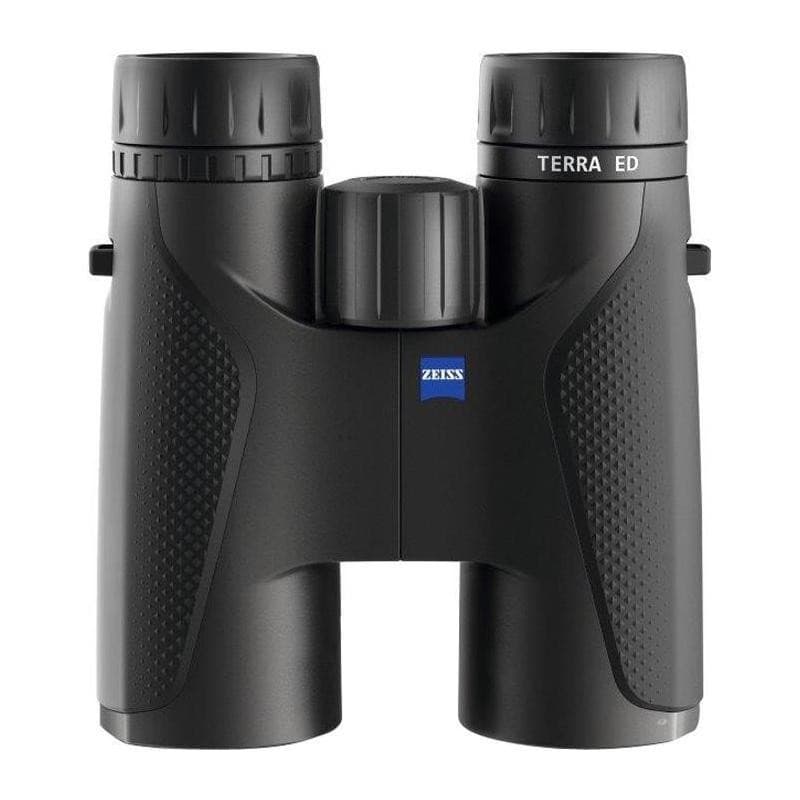 Zeiss Terra ED 8x42 | 8×42 | 125 m | 725 g | 5.3 mm | ★74.9 |
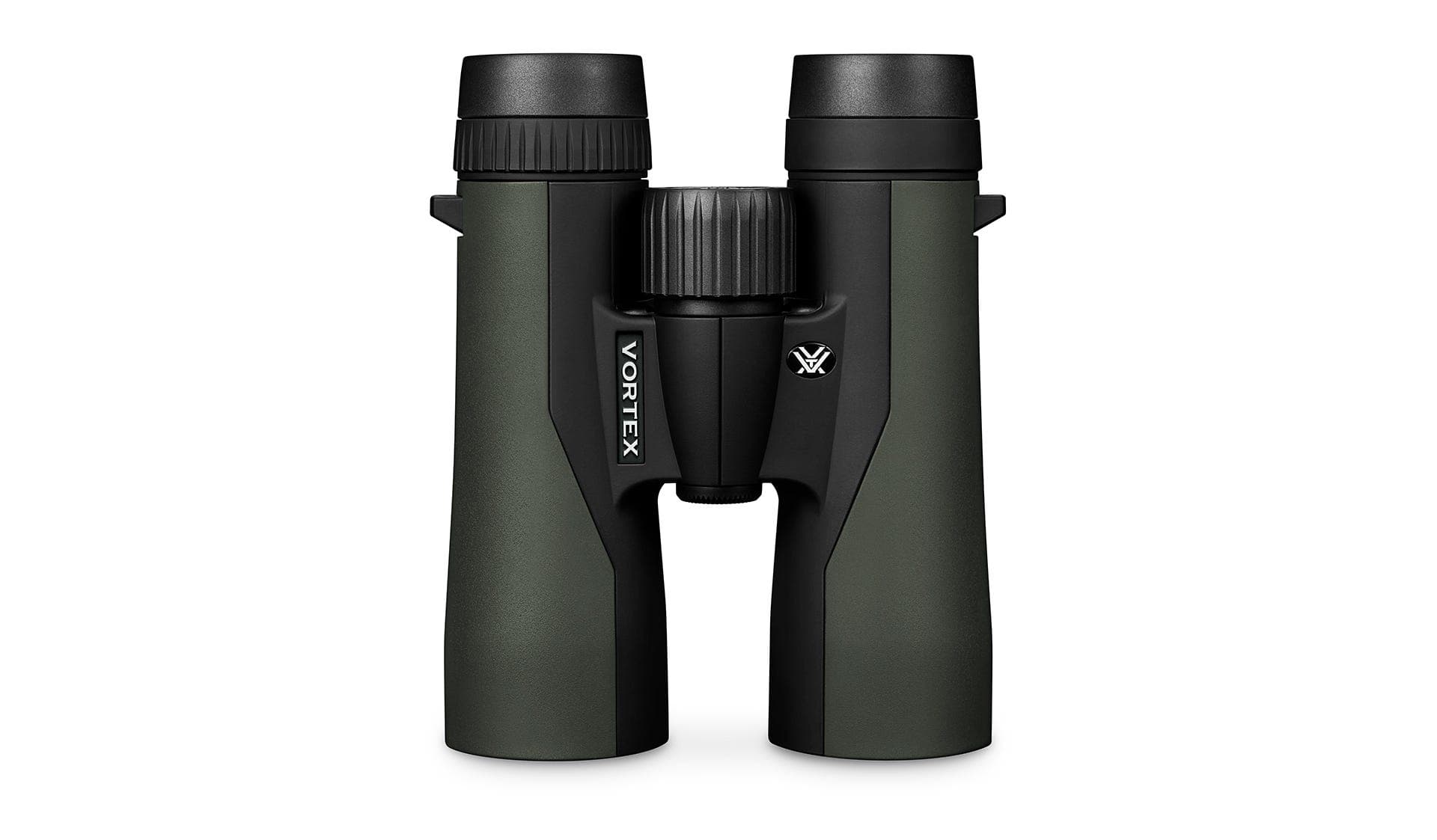 Vortex Crossfire HD 8x42 | 8×42 | 131 m | 675 g | 5.3 mm | ★74.3 |
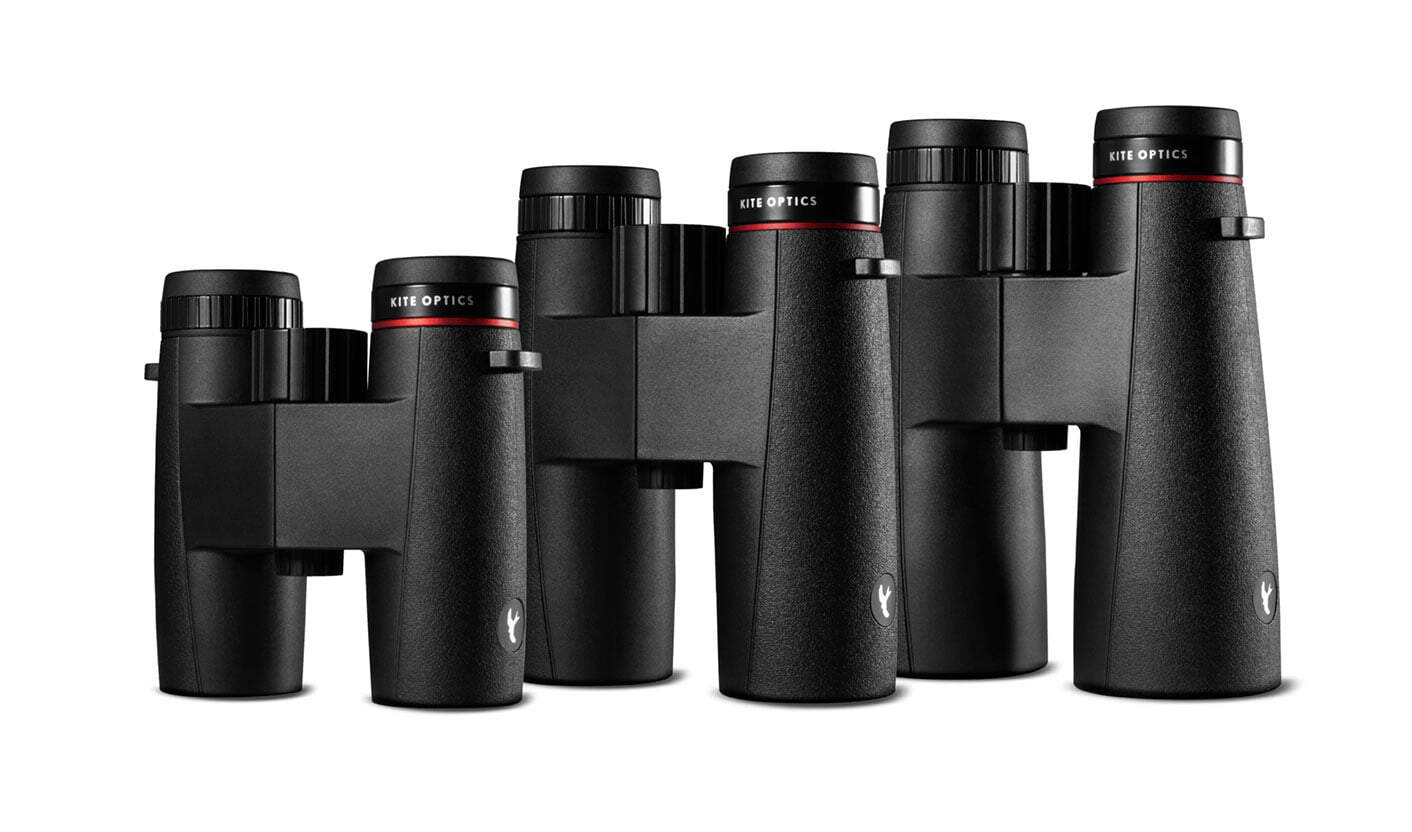 Kite Ursus 8x42 | 8×42 | 132 m | 760 g | 5.3 mm | ★73.8 |
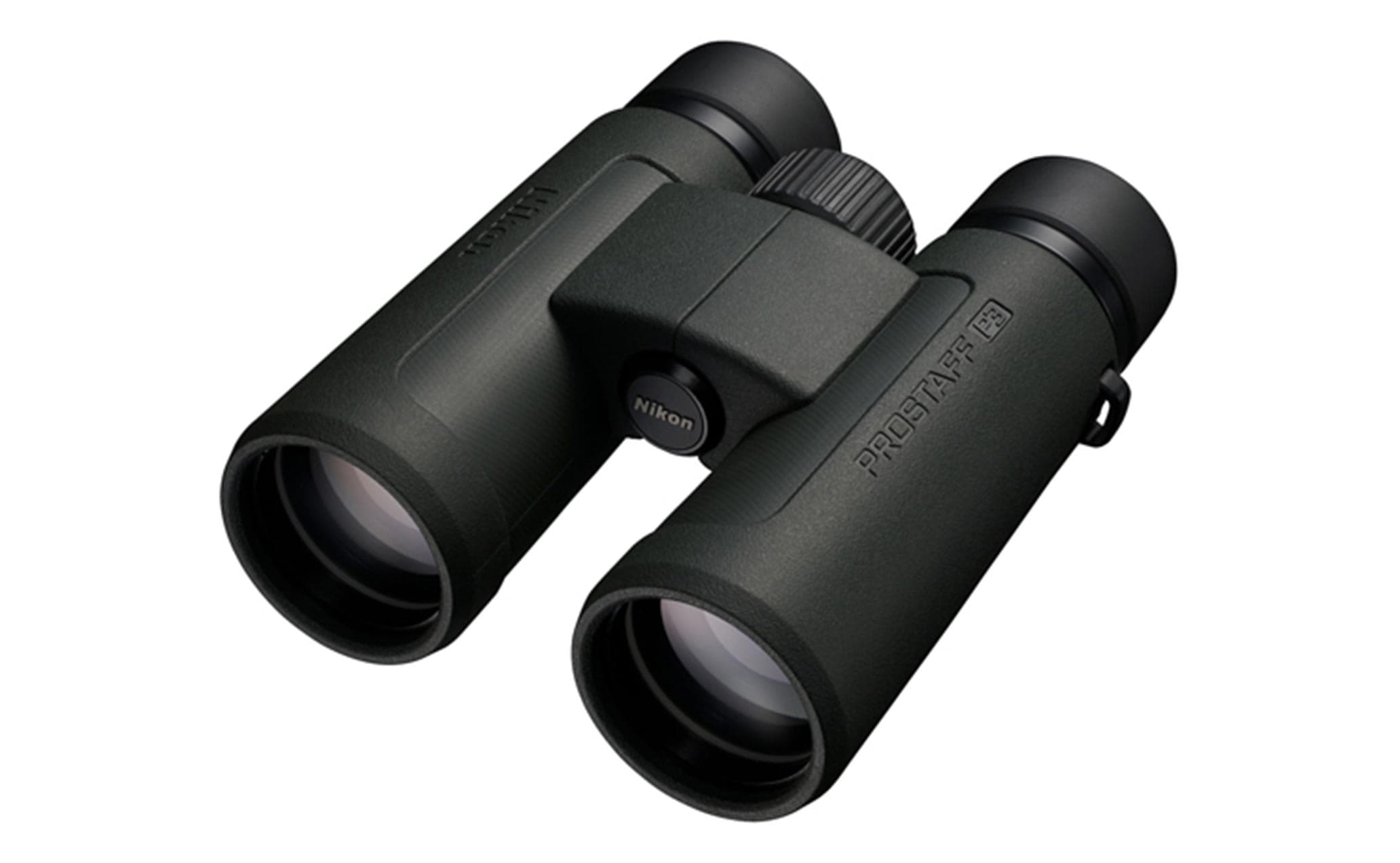 Nikon Prostaff P3 8x42 | 8×42 | 126 m | 575 g | 5.3 mm | ★73.6 |
Optical quality: what the Diamondback HD is really worth
At £230 you do not expect miracles. And yet Vortex has fitted coatings here that you normally meet two rungs higher. Remember that no pair of binoculars magnifies better than another (an 8x is an 8x); what it does is show you a cleaner, less tiring image. Here is where the Diamondback HD wins, and where it pays for its price tag.
Dielectric and phase correction: the pleasant surprise
The lenses are fully multi-coated, which means every air-to-glass surface gets an anti-reflection treatment rather than just the outer ones. On top of that sits a dielectric prism coating (a mirror layer on the prism that bounces more light back towards your eye) and phase correction (which re-aligns the light waves a roof prism splits apart, so contrast holds up). At this money that combination is rare, and you can see it: the image is bright and genuinely contrasty, with none of the grey veil you get from true budget optics.
Careful with the "HD" in the name
Sharpness and field of view
The centre of the image is sharp and easy on the eye. The edges soften earlier than on premium pairs, which is exactly what you would expect at this level, and honestly it is a fair trade. The real reservation is the field of view of 131 m at 1000 m. That is workable, but it is narrower than most of the competition around it.
What does that mean on the ground? You sweep along a hedgerow with a little less ease, and you recentre more often when something moves. Scanning a wide estuary or following a bird in flight asks a bit more of you. It is the one spec where the Diamondback HD is measurably behind its rivals, and no amount of good coating makes up for it.
Colour rendering
The rendering is fairly neutral and natural, with no cast that gets in the way when you are trying to pin down a species. Some cheap pairs push things warm or cold enough to make a plumage call awkward. This one does not. Given the price, there is really nothing to complain about here.
Ergonomics: light and surprisingly versatile
618 g, well carried
At 618 g this is a light pair, even next to models costing several times as much. The format is compact, the grip is secure, and the whole thing sits steady in the hands. Over a full day out you never really feel it round your neck, and that matters more than people think: a heavy pair is a pair you leave in the car.
Eye relief and spectacle wearers
The eye relief of 17 mm (the distance at which your eye still sees the whole image) is comfortable, glasses on or off. The eyecups hold their setting properly rather than creeping back down under pressure, which is a nice touch on a criterion that is often botched at this price. If you wear spectacles, you will not be fighting for the full field here.
The gap: no tripod adaptability
Unlike a lot of 8x42s, this version has no tripod fitting. For static, drawn-out watching from a hide, or for sharing the view with someone else without your arms giving up, that is a genuine limitation. If that is how you observe, note it now: there is no accessory that quietly fixes it later.
In the field: birding, hiking and hunting
The radar scores above translate how this pair behaves depending on what you actually do with it. Here is what that looks like in concrete terms, use by use.
Birding: a very good place to start
For getting started it ticks the essentials: a bright image, low weight, and that 1.5 m close focus which quietly opens the door to insects and flowers as well as birds. The narrower field asks a little more concentration when you are tracking something in flight, but you adapt to it quickly. For a first serious pair aimed at garden, woodland and reserve work, it is hard to argue with.
Hiking: the light weight pays off
618 g, waterproof and fogproof: it slips into a pack and takes rain without flinching. If you want to observe while you walk without the low-level anxiety of dragging £1,000 of glass over a stile, this is the reassuring compromise. It is also the pair I would happily hand to a friend at a viewpoint.
Woodland hunting: its best score
This is where it posts its best number. At short and medium range under a canopy, the brightness the coatings deliver and the low weight do the work between them. For long-range stalking in open country, on the other hand, a bigger objective will take the advantage, and no coating will bridge that gap.
Build, weatherproofing and that famous lifetime warranty
Build quality and ArmorTek
The construction is solid and unfussy. Nothing here is trying to look like a £1,000 pair, and that honesty suits it. The ArmorTek coating protects the exterior lenses from scratches, oil and fingerprints, which is genuinely welcome on a pair you cart everywhere and wipe clean far too often with whatever is in your pocket.
Waterproof and fogproof
The pair is waterproof and nitrogen filled, so it is fogproof: no internal condensation when you step from a warm car into cold air, and nothing to worry about in a British downpour. At £230 that is far from a given elsewhere, and it is one of the reasons this model has sold so well for so long.
The VIP warranty, the argument that makes the difference
Do not underestimate what that changes about the maths. Binoculars get dropped on rocks, shut in car doors and rained on for years. A pair you can hand back after a decade of hard use, without hunting for a receipt, is a very different proposition from one you have to nurse. It is the single strongest reason to choose this model over a similarly priced rival.
Diamondback HD against the Kowa BDII-XD and the Nikon Monarch HG
The question is not "is it good for £230" (it is), but "should you spend more". Here is how I place it against the two pairs people most often weigh it against.
| Model | Where it sits | Who it is for |
|---|---|---|
| Vortex Diamondback HD 8x42 | The smart entry level, lifetime warranty | Anyone who wants a serious first pair without overspending |
| Kowa BDII-XD 8x42 | XD glass and a wider field, around 1.6x the price | Anyone who wants the colour fringing gone and more sharpness |
| Nikon Monarch HG 8x42 | Near-alpha, around 4x the price | Anyone who observes often and wants the top of the tree |
My summary: if your budget tops out around £300, the Diamondback HD is a very solid choice, and the warranty tilts it further. If you can stretch to £380, the Kowa BDII-XD brings XD glass and a wider field, and that is a real, visible gain at the eyepiece rather than a spec-sheet one. Beyond that you are in a different world, with prices to match.
Who the Diamondback HD 8x42 is for (and who it is not)
- You are starting out and your budget sits around £230: yes, this is one of the best buys on the market.
- You want to buy once and be done: the lifetime VIP warranty is a knockout argument.
- You also look very close up (insects, flowers): the 1.5 m close focus is excellent.
- Colour fringing bothers you, or you want a wide field: step up to an ED glass pair such as the Kowa.
- You observe from a tripod: walk on by, this version does not take one.
Ready to look at models?
The comparison tool applies this exact method: it ranks binoculars by how you'll use them and your budget.
Compare all binocularsYour questions about the Vortex Diamondback HD 8x42
Is Vortex's lifetime warranty really unconditional?
Does the "HD" mean the Diamondback has ED glass?
Diamondback HD 8x42 or 10x42?
Should I buy the Vortex Diamondback HD or the Kowa BDII-XD?
Are they waterproof and fogproof?
Can you mount them on a tripod?
About the author
Teddy
I spend my weekends with an eye to the eyepiece, out in the field and back at the test bench. My reviews lean on measured specs and real use, never on manufacturer sheets copied across.