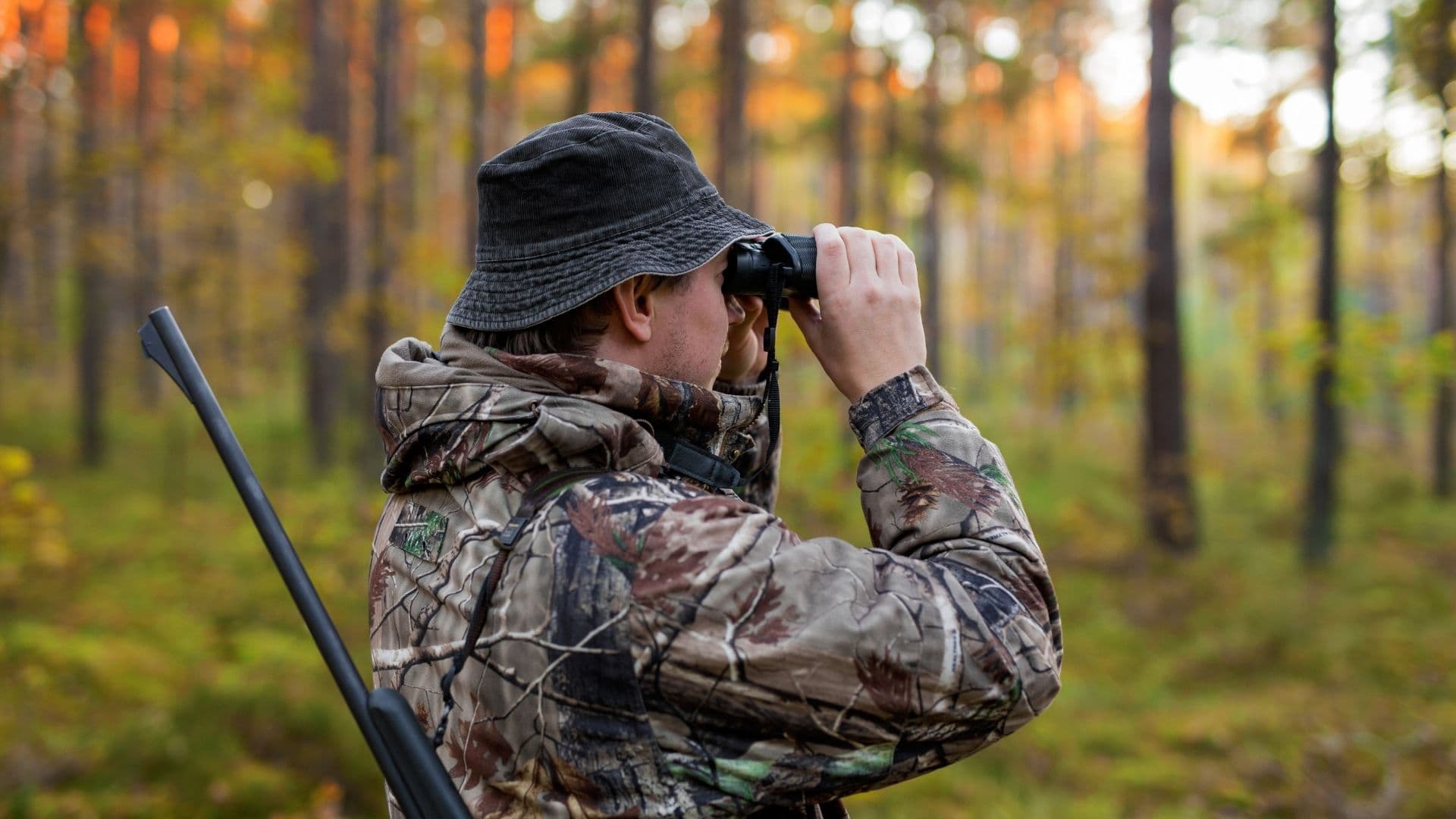
Best thermal binoculars: the guide to choosing well
Thermal changes everything, day or night. Here is how it works, what really matters, and what it costs.
Want to understand which are the best thermal binoculars and how to choose them? I am Teddy, a travel photographer. Let me be upfront: I do not test thermal gear myself, it sits outside my usual field. This guide is an honest, documented synthesis to help you find your way without the jargon.
A thermal binocular does not capture light, it captures heat. It reveals an animal at hundreds of metres, in the dead of night as in broad daylight, even through vegetation. It is a powerful, expensive tool, and one whose use is regulated: more on that below.
My top thermal binoculars
Two brands dominate the market: Pulsar and HIKMICRO. Here is my ranked selection of the most accomplished models, each with the current retail price. It is an editorial, documented ranking (these models are not in our comparison tool), not a field test.
HIKMICRO Habrok Pro HX60LN
The best performer in my selection. A 1280×1024 sensor, the longest range of the group, a laser rangefinder and a 4K day/night channel: it detects far and identifies sharply. If the budget allows, this is the one.
- 1280×1024 sensor, the highest resolution in the top
- Detection range ~3,100 m
- Multispectral 4K day/night + laser rangefinder
- NETD <18 mK, very sensitive

Pulsar Merger LRF XL50
The best pure thermal. An HD 1024×768 sensor, a smooth 50 Hz display and a built-in laser rangefinder, with Pulsar's ruggedness and ergonomics.
- HD 1024×768 sensor (12 µm)
- Detection range ~2,300 m
- Laser rangefinder up to 1,000 m
- 50 Hz very smooth, ~8 h battery life

HIKMICRO Habrok Pro HQ50LN
The best premium value. You keep the 4K day/night multispectral channel, the rangefinder and an IP67 body, with the best thermal sensitivity of the group.
- Multispectral 4K day/night + rangefinder
- NETD <15 mK, the best sensitivity in the top
- Detection range ~2,600 m
- IP67 magnesium body, more affordable than the HX60

Pulsar Merger Duo NXP50
The clever 2-in-1. A thermal channel to spot the heat, a digital night-vision channel to recognise, with a picture-in-picture mode to see both at once.
- Thermal 640×480 + digital night vision
- Picture-in-picture mode (PiP) to combine both
- Detailed 1920×1200 night sensor
- Pulsar reliability and ergonomics

HIKMICRO Habrok 4K HE25LN
The affordable multispectral. The thermal plus 4K day/night combo and a laser rangefinder to get seriously started without blowing the budget. Winner of iF Design and Red Dot 2024.
- Multispectral 4K day/night + laser rangefinder
- The most affordable in my selection
- 4K sensor, 60 mm objective (5.5-22×)
- Compact, iF Design & Red Dot 2024 award-winner

| Model | Thermal sensor | NETD | Detection range | Rangefinder | Multispectral |
|---|---|---|---|---|---|
| HIKMICRO Habrok Pro HX60LN | 1280×1024 (12 µm) | <18 mK | 3,100 m | Yes (1,000 m) | Yes (4K day/night) |
| Pulsar Merger LRF XL50 | 1024×768 (12 µm) | <40 mK | 2,300 m | Yes (1,000 m) | No (pure thermal) |
| HIKMICRO Habrok Pro HQ50LN | 640×512 (12 µm) | <15 mK | 2,600 m | Yes (1,000 m) | Yes (4K day/night) |
| Pulsar Merger Duo NXP50 | 640×480 (17 µm) | <25 mK | 1,800 m | No | Yes (night vision) |
| HIKMICRO Habrok 4K HE25LN | 256×192 (12 µm) | <35 mK | 1,200 m | Yes | Yes (4K day/night) |
Which model to choose for your use
All five are excellent choices: your use and your budget decide. Here is my shortcut depending on what you are after.
| Your need | The model I would look at |
|---|---|
| Detect the farthest, no compromise | HIKMICRO Habrok Pro HX60LN |
| Best pure thermal, smooth image (50 Hz) | Pulsar Merger LRF XL50 |
| Detect AND identify, best value | HIKMICRO Habrok Pro HQ50LN |
| Thermal + night vision in one body | Pulsar Merger Duo NXP50 |
| Get started on a small budget | HIKMICRO Habrok 4K HE25LN |
How a thermal binocular works
Every body emits infrared radiation tied to its temperature. A thermal binocular measures these heat differences with a special sensor (a microbolometer) and turns them into an image. An animal, warmer than its surroundings, shows up bright on a dark background, or in colour depending on the chosen palette.
As a result, it works day and night, in light fog or smoke, and partly sees through vegetation. It does not give a « sharp » image like classic binoculars: it serves to detect and locate, not to read the fine detail of a plumage.
The specs that make the difference
The price of a thermal unit comes down to a few key specs. These are the ones I would look at first.
- Sensor resolution. The pixel count of the microbolometer (often stated as 384×288 or 640×480). The higher it is, the finer the image and the more precise long-range detection.
- Thermal sensitivity (NETD). Given in millikelvins (mK): the lower it is, the better the unit distinguishes small heat differences, useful in damp weather.
- Detection range. The distance at which an animal is spottable. It depends on the sensor and objective; spec sheets give a theoretical value, to be taken as a ballpark.
- The laser rangefinder (LRF). It measures the exact distance to the target. A real plus for sizing up an animal, present on the « LRF » models.
- Refresh rate. In hertz (often 50 Hz), it keeps the image smooth when you pan or an animal moves.
- Battery life and battery type. Removable or not, in real hours of use. Decisive on long sessions, often plan for a spare battery.
- Multispectral. Some models combine thermal with a digital day/night channel, to identify after detecting.
Thermal or night vision: what is the difference?
The two are often confused, but they are distinct technologies. They do not do the same job.
| Criterion | Thermal | Night vision |
|---|---|---|
| What it captures | Heat | Residual light (amplified) |
| In daylight | Yes | No (risk of damaging the tube) |
| Detecting an animal | Excellent | Decent |
| Identifying details | Limited | Better |
| Through vegetation | Partly | No |
In short: thermal excels at spotting a heat source, even hidden. Night vision gives a more « natural » image for identifying, but needs a little light. Multispectral models bring the two together, at a steep price.
What budget for thermal binoculars?
It is a significant outlay. I stick to orders of magnitude, prices move fast and the price table above is the reference.
| Tier | Indicative range | For whom |
|---|---|---|
| Entry | €1,000 to €2,000 | Discover thermal, moderate long-range detection. |
| Mid-range | €2,000 to €4,000 | Good sensor, often a rangefinder. The choice of regular hunters. |
| High-end | €4,000 to €6,000 and up | Large sensor, multispectral, rangefinder, battery life. Maximum demand. |
Rules and responsible use
Owning a handheld thermal binocular is generally legal. But its use for hunting is tightly regulated and varies a lot from one country and region to another: some places allow it for detection, others restrict or ban it, especially for weapon-mounted thermal or night-vision sights.
FAQ: best thermal binoculars
What is a thermal binocular for?
Thermal or night vision: which to choose?
How much does a good thermal binocular cost?
What is the best thermal binocular brand?
Can a thermal binocular see through walls or fog?
Are thermal binoculars legal for hunting?
Ready to look at models?
The comparison tool applies this exact method: it ranks binoculars by how you'll use them and your budget.
See the binoculars comparison toolAbout the author
Teddy
Travel and adventure photographer based in Vannes for nearly ten years. I watch wildlife through optics every day and help nature lovers choose their binoculars and spotting scopes, without the jargon.